Permanent Exhibit
Introducing Hanyang University Museum.

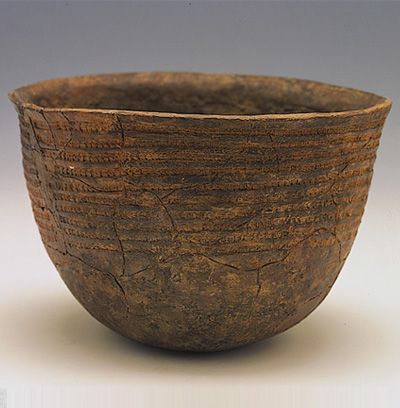
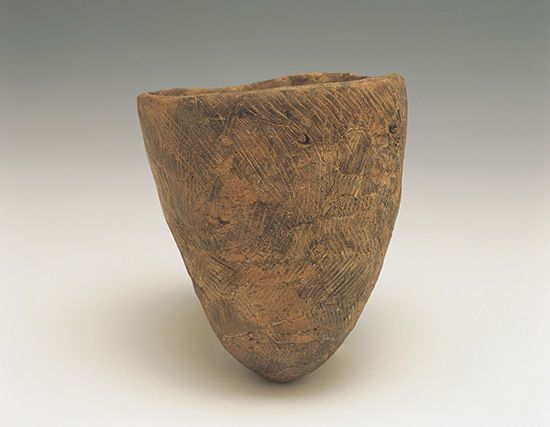
Korea's Neolithic culture began when ancient Asians who lived in Siberia migrated to the Korean Peninsula through northeastern China and the Maritime Province. Neolithic people settled and lived in large rivers or beaches rich in water and food resources, including dwellings and clammy land. The biggest characteristics of this era are the invention and production of earthenware, which was used by grinding stones as needed, and many agricultural tools and weapons were produced along with changes in life.
Major Artifact
Yeongjongdo Island archaeological sites
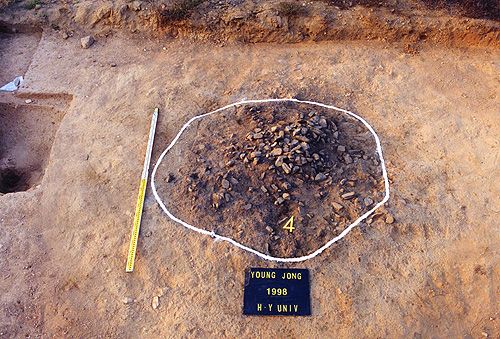
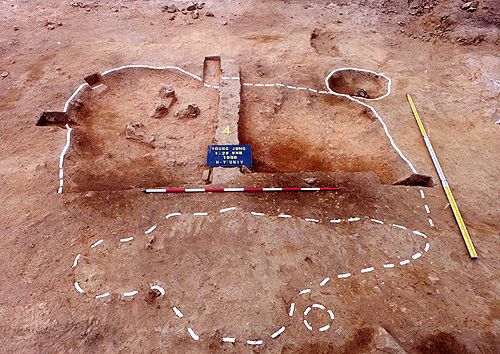
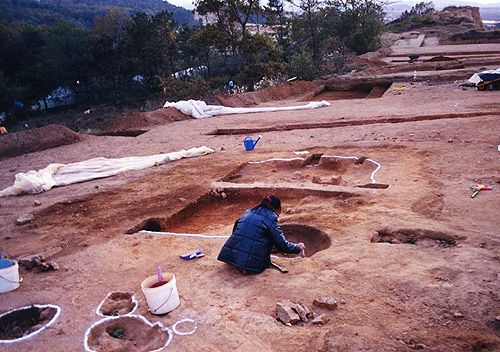
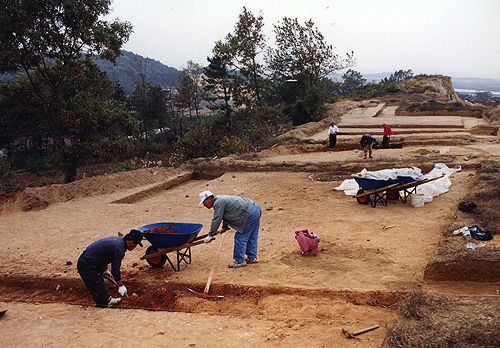
Yeongjongdo Island, located in the central part of the west coast of Incheon Metropolitan City, has served as a bridgehead for cultural propagation between the north and the south since prehistoric times. Currently, it was built Incheon Airport through reclamation work and became one with nearby Yongyu Island, and it was also connected to Incheon City through Incheon Bridge.
fist axes and hunting stones have been found in Songsan, confirming the possibility of the existence of relics from the Paleolithic period. The relics of the Neolithic Age have been identified throughout the development site, including the sites of rice paddies, the remains of Jeotgae Village in Unseo-dong, the remains of Yongyudo, the remains of Songsan, and the remains of Sammokdo, indicating that people have been living there for at least 3,000 years.
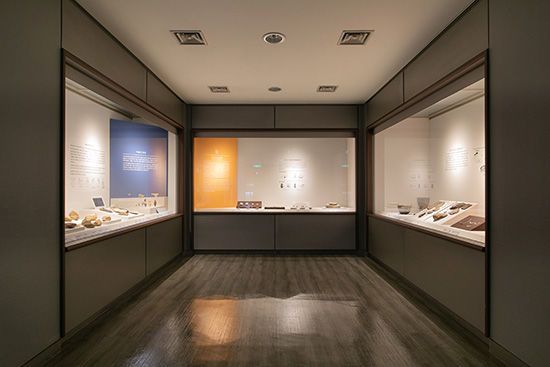
Exhibition Room Photos
상세보기