Permanent Exhibit
Introducing Hanyang University Museum.
 The Bronze Age
As agriculture and herding were carried out in earnest in the Bronze Age, classes were divided along with the increase in productive power, and difference in status gradually occurred. The Bronze Age in Korea was influenced by northern culture, and the Bronze Age was difficult to produce, making it mainly for the ruler's accessories or rituals. Although stone tools and wood tools were still used for everyday use, they are more diverse than the Neolithic Age, and although bare-patterned pottery was generally made, it is interesting to know that there are differences between regions.
Major Artifact
Anmyeondo Gonam-ri Shell Mound
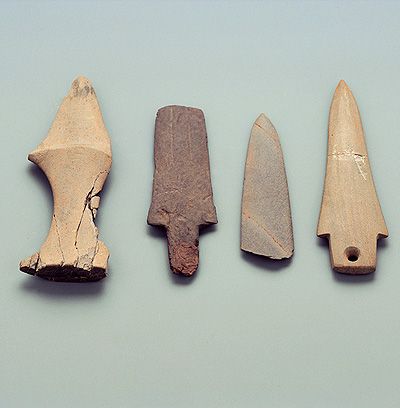
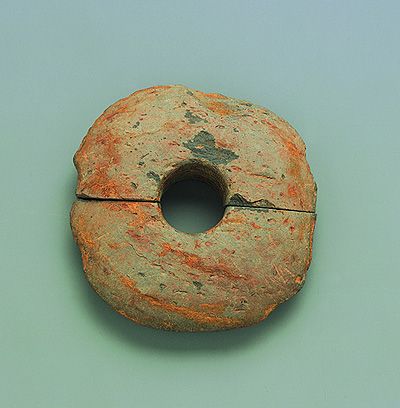
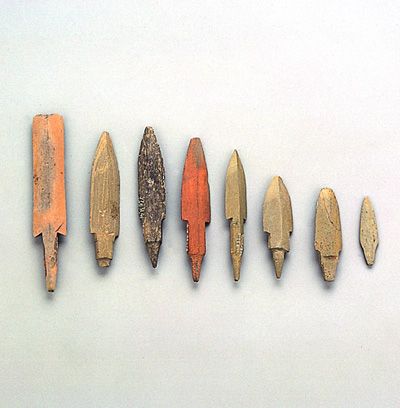
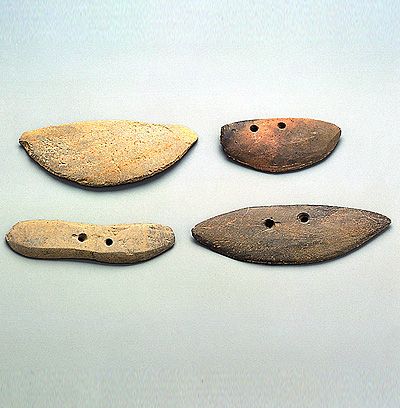
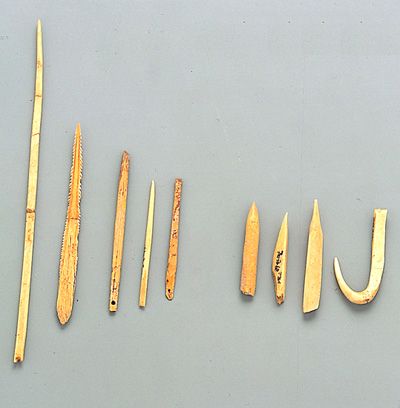
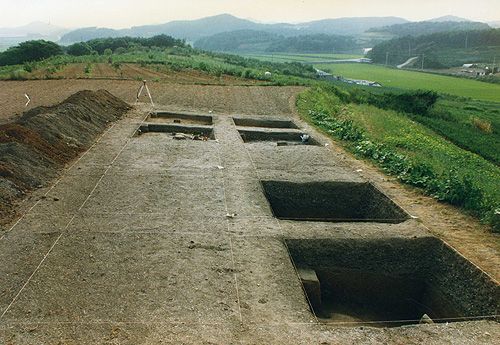
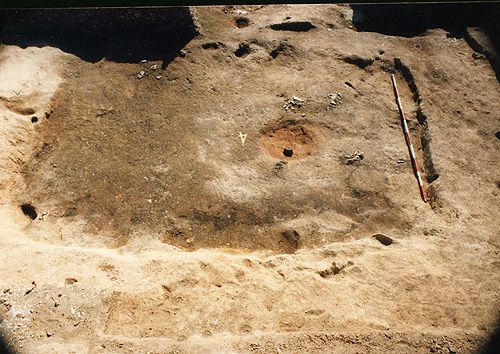
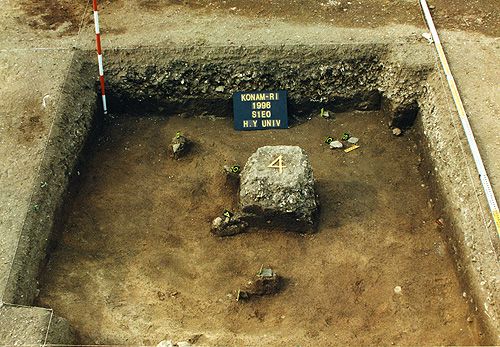
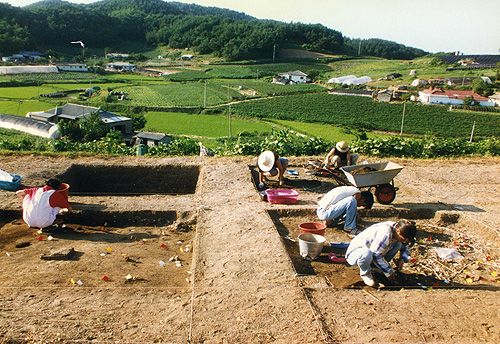
The sites of Anmyeondo Island are located in Gonam-ri, Anmyeondo, Taean County, South Chungcheong Province, on a hilly area overlooking Cheonsuman Bay. It is a midden formed from the Neolithic Age to the Bronze Age, and is a representative living relic of the central region that can restore cultural relations between the coast and inland areas and the movement of residents. The relics unearthed include comb-patterned earthenware from the Neolithic Age, bare-patterned earthenware, red pottery, and many agricultural tools as well as stone arrowheads, half-moon stone knives, garak wheels, stone axes, stone chisels, and home stones.
Bucheon Gogang-dong Prehistoric Site
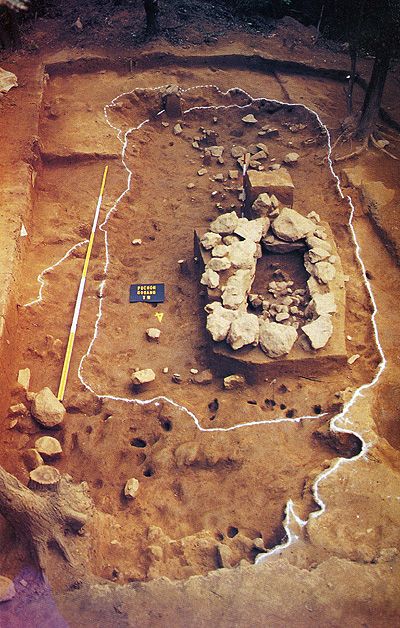
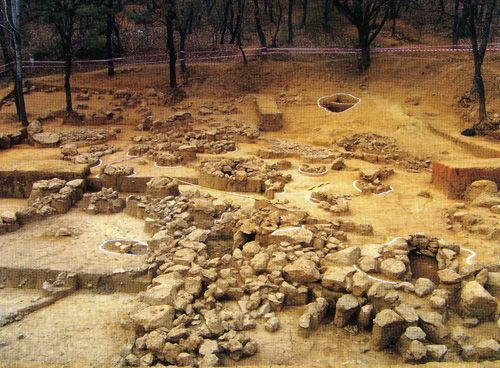
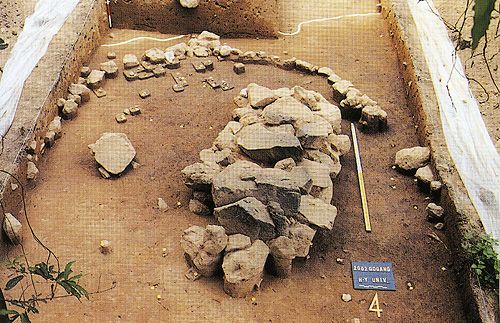
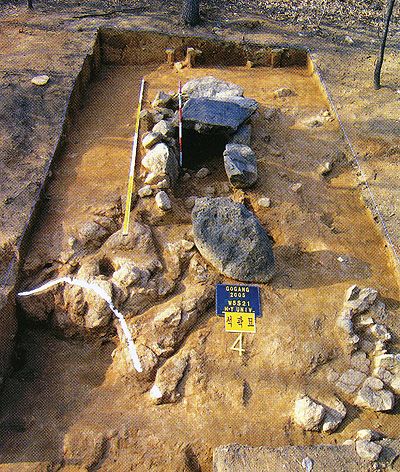
It is a village relic dating from the Bronze Age between the Iron Age that was found in a hilly mountain area in Gogang-dong, Bucheon-si, Gyeonggi-do, and there have been seven excavations since its discovery in 1995. Along the ridge overlooking the Gimpo Plain, 13 pit house sites have been excavated so far, and the red-stone ring-shaped remains, which are believed to be the site of a ritual site, have been found at the highest point. The red-stone ring-shaped remains are unheard of on the Korean Peninsula, where a square stone building facility is built, and a sphere (溝) was dug to have a radius of about 10 meters around it. It seems to be a sacred area of the village that can become the prototype of an ancient Sodo, and is presumed to be the place where the ritual was held at the time, considering the remains found around it.
Exhibition Room Photos
상세보기